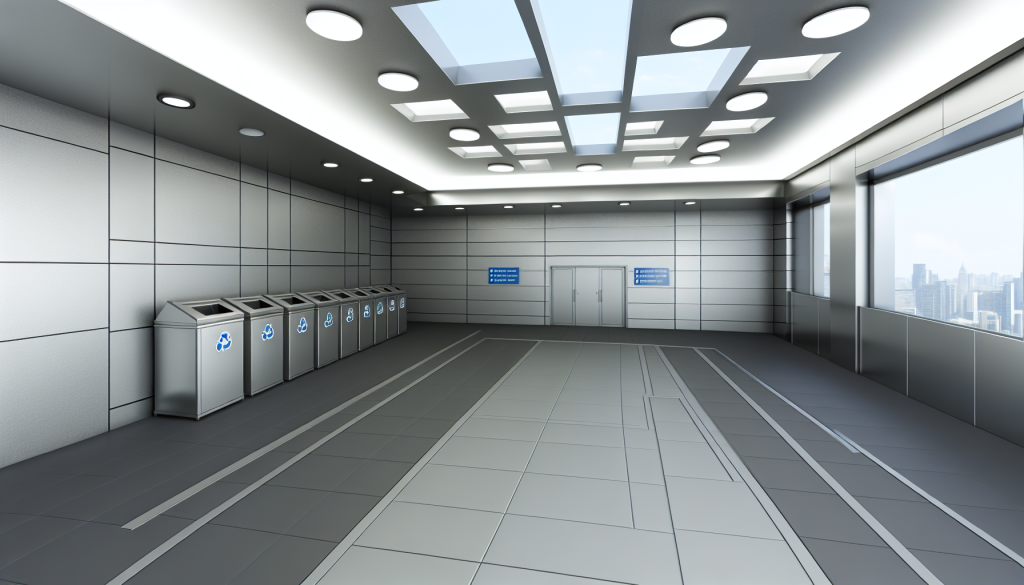
Objective
To maintain a clean, safe, and hygienic recycling area in compliance with Australian cleaning standards and workplace health and safety requirements.
Quick Reference
- Facility Type: Industrial
- Space: Recycling Area
- Frequency: Daily
- Responsible Role: Cleaning Team Member
- Standard Code: ANCMF-AU-I-RA-03
Service Level
[“AS/NZS 3733:1995″,”ISO 14001:2015″,”EN 13549:2001″,”ISSA CIMS-GB”,”NEN 2075″]
Scope of Work
- Remove rubbish and debris from the recycling area.
- Sanitise all surfaces, including sorting tables and bins.
- Sweep and mop floors to remove dust and spills.
- Wipe down walls and equipment to prevent dust accumulation.
- Ensure all rubbish bins are emptied and cleaned.
- Use colour-coded cleaning systems to prevent cross-contamination.
Method
- Begin by removing all visible rubbish and debris from the area and dispose of it in the designated rubbish bins.
- Use a broom to sweep the entire floor area, ensuring all dust and debris are collected.
- Prepare a mop and bucket with an appropriate cleaning solution and mop the floor, paying special attention to high-traffic areas.
- Wipe down all surfaces, including sorting tables and equipment, with a sanitising solution.
- Empty all rubbish bins, replace liners, and clean the bins with a disinfectant.
- Inspect the area for any remaining dirt or debris and repeat cleaning steps as necessary.
Equipment
- Broom and dustpan
- Mop and bucket
- Sanitising solution
- Colour-coded cleaning cloths
- Rubbish bin liners
- Personal protective equipment (PPE)
Quality Criteria
| Performance Level | Criteria |
|---|---|
| Excellent | All surfaces are visibly clean and sanitised; no dust or debris present; bins are empty and clean; no odours detected. |
| Good | Surfaces are mostly clean with minor dust; bins are emptied and mostly clean; minimal odours present. |
| Pass | Surfaces have some dust; bins are emptied but not fully clean; some odours present. |
| Fail | Surfaces are visibly dirty; bins are full or dirty; strong odours present. |
Documentation
- Cleaning Checklist: Digital or paper checklist to verify completion of all cleaning tasks
- Incident Reports: Documentation of any cleaning-related incidents, spills, or issues encountered
- Maintenance Records: Record any maintenance needs identified during cleaning (for reporting to maintenance team)
- Photos: Before and after photos as requested to document cleaning completion and quality