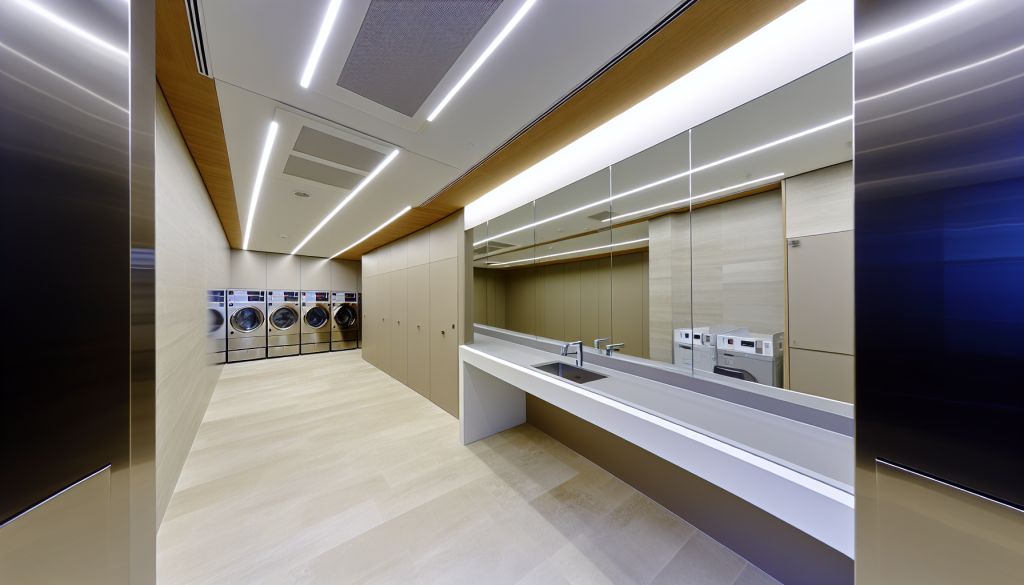
Objective
Ensure the laundry area in hospitality facilities is cleaned to the highest Australian standards, maintaining hygiene, safety, and operational efficiency.
Quick Reference
- Facility Type: Hospitality
- Space: Laundry
- Frequency: Daily
- Responsible Role: Cleaning Team Member
- Standard Code: ANCMF-AU-H-L-03
Service Level
[“AS/NZS 3733:1995″,”ISO 14001:2015″,”EN 13549:2001″,”ISSA CIMS-GB”,”NEN 2075:2011″]
Scope of Work
- Dusting all surfaces including shelves, counters, and equipment.
- Sanitising all high-touch surfaces such as door handles, light switches, and taps.
- Vacuuming and mopping floors to remove dirt and debris.
- Cleaning and sanitising laundry machines, including doors and control panels.
- Emptying and sanitising rubbish bins.
- Cleaning and sanitising sinks and taps.
- Ensuring all cleaning supplies are replenished and stored correctly.
- Checking and cleaning air vents and filters.
Method
- Begin by dusting all surfaces using a microfibre cloth to capture dust effectively.
- Apply a suitable sanitiser to all high-touch surfaces and allow the recommended contact time before wiping clean.
- Vacuum the floor using a HEPA-filter vacuum to ensure dust and allergens are captured.
- Mop the floor with a neutral pH cleaner, ensuring no residue is left.
- Clean the exterior of laundry machines with a disinfectant wipe, paying special attention to control panels and handles.
- Empty rubbish bins, replace liners, and sanitise the bin interior and exterior.
- Clean sinks and taps with a non-abrasive cleaner, ensuring all soap scum and stains are removed.
- Check air vents and filters, clean with a damp cloth, and ensure they are free from dust and debris.
Equipment
- Microfibre cloths
- HEPA-filter vacuum
- Mop and bucket
- Neutral pH floor cleaner
- Sanitiser spray
- Disinfectant wipes
- Rubbish bin liners
- Non-abrasive cleaner
Quality Criteria
| Performance Level | Criteria |
|---|---|
| Excellent | All surfaces are visibly clean and free from dust and stains; no odours present; high-touch surfaces are sanitised and dry; floors are spotless with no residue; rubbish bins are empty and sanitised; air vents are clean and unobstructed. |
| Good | Surfaces are mostly clean with minor dust; no strong odours; high-touch surfaces are sanitised; floors are clean with minimal residue; rubbish bins are empty; air vents have minor dust. |
| Pass | Surfaces have some dust; mild odours present; high-touch surfaces are mostly sanitised; floors have some residue; rubbish bins are not overflowing; air vents have visible dust. |
| Fail | Surfaces are dusty and stained; strong odours present; high-touch surfaces are not sanitised; floors are dirty with visible residue; rubbish bins are overflowing; air vents are clogged with dust. |
Documentation
- Cleaning Checklist: Digital or paper checklist to verify completion of all cleaning tasks
- Incident Reports: Documentation of any cleaning-related incidents, spills, or issues encountered
- Maintenance Records: Record any maintenance needs identified during cleaning (for reporting to maintenance team)
- Photos: Before and after photos as requested to document cleaning completion and quality