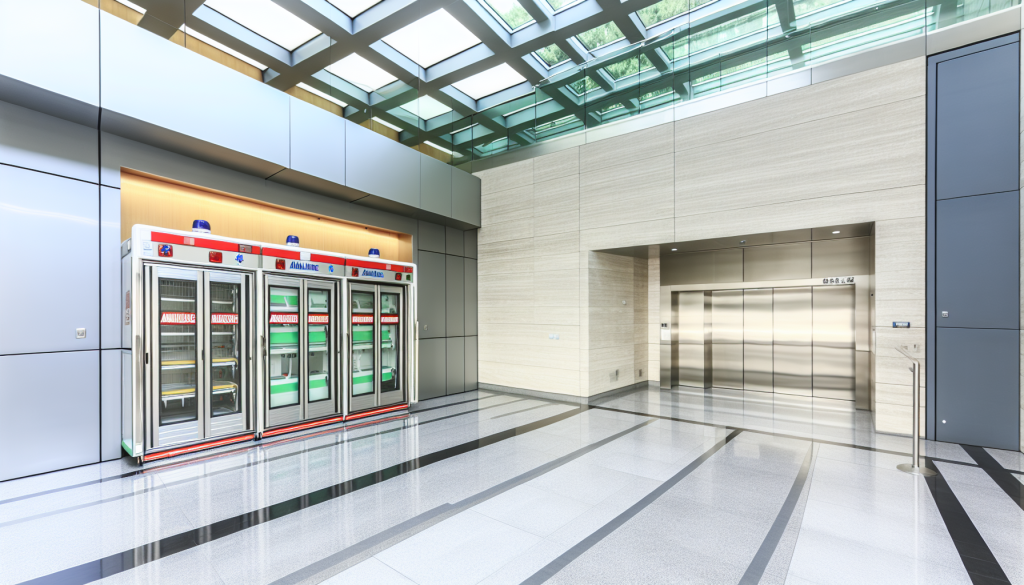
Objective
Ensure the highest level of cleanliness and hygiene in the ambulance station to support health and safety standards, infection control, and operational efficiency.
Quick Reference
- Facility Type: Government Building
- Space: Ambulance Station
- Frequency: Daily
- Responsible Role: Cleaning Team Member
- Standard Code: ANCMF-AU-GB-AS-01
Service Level
[“AS/NZS 3733:1995″,”ISO 14001:2015″,”EN 13549:2001″,”ISSA Cleaning Standards”,”AS/NZS 3666:2011″,”AS 1851:2012″]
Scope of Work
- Dusting all surfaces including desks, shelves, and equipment.
- Vacuuming all carpeted areas and mats.
- Mopping hard floors with appropriate disinfectant solutions.
- Sanitising all high-touch surfaces such as door handles, light switches, and handrails.
- Cleaning and sanitising toilets, sinks, and taps.
- Emptying and sanitising rubbish bins and replacing liners.
- Cleaning windows and glass surfaces for visibility and hygiene.
- Ensuring all cleaning supplies are replenished and stored correctly.
Method
- Begin with dusting from high to low surfaces to prevent recontamination.
- Vacuum all carpeted areas using a HEPA-filter vacuum cleaner to minimise airborne particles.
- Mop hard floors using a colour-coded mop system to prevent cross-contamination.
- Sanitise high-touch surfaces with hospital-grade disinfectant.
- Clean toilets and sinks using non-abrasive cleaners and disinfectants.
- Empty rubbish bins, replace liners, and sanitise bin interiors.
- Clean windows using a squeegee and glass cleaner for streak-free results.
- Check and restock cleaning supplies, ensuring proper storage.
Equipment
- HEPA-filter vacuum cleaner
- Colour-coded mop and bucket system
- Microfibre cloths
- Hospital-grade disinfectants
- Non-abrasive cleaners
- Glass cleaner and squeegee
- Rubbish bin liners
- Cleaning trolley
Quality Criteria
| Performance Level | Criteria |
|---|---|
| Excellent | All surfaces are visibly clean and free of dust, dirt, and smudges. Floors are spotless with no streaks or residue. High-touch areas are sanitised and free of fingerprints. Toilets and sinks are sparkling with no stains or odours. Rubbish bins are empty, clean, and odour-free. |
| Good | Most surfaces are clean with minimal dust or smudges. Floors are clean with slight streaks. High-touch areas are mostly sanitised with few fingerprints. Toilets and sinks are clean with minor water spots. Rubbish bins are empty and clean with slight odour. |
| Pass | Surfaces have some dust and smudges. Floors have visible streaks or residue. High-touch areas have visible fingerprints. Toilets and sinks are clean but have visible water spots or stains. Rubbish bins are empty but have noticeable odour. |
| Fail | Surfaces are visibly dirty with dust and smudges. Floors are dirty with streaks and residue. High-touch areas are not sanitised and have visible fingerprints. Toilets and sinks are stained with odours. Rubbish bins are full or have strong odour. |
Documentation
- Cleaning Checklist: Digital or paper checklist to verify completion of all cleaning tasks
- Incident Reports: Documentation of any cleaning-related incidents, spills, or issues encountered
- Maintenance Records: Record any maintenance needs identified during cleaning (for reporting to maintenance team)
- Photos: Before and after photos as requested to document cleaning completion and quality